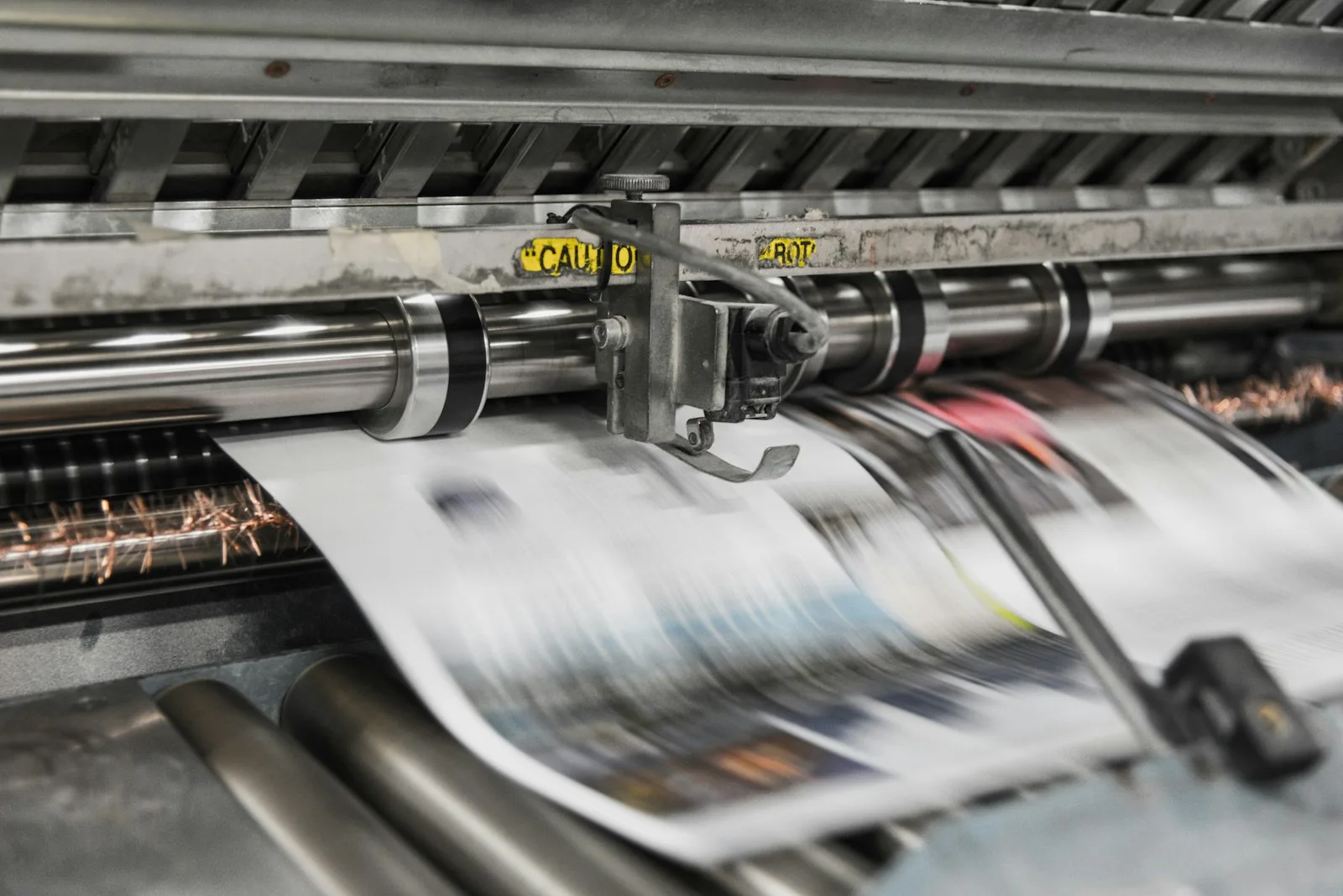
Small printers and independent designers say they are increasingly pushing back against customers who arrive with AI-generated artwork, from birthday cards to posters, and ask for it to be printed.
Some businesses have begun displaying signs or posting online messages setting out their policies, with a few declining to handle work they describe as low-quality AI 'slop'.
Owners say the issue is partly practical, as generated images often come at low resolution or contain garbled text and odd details that do not reproduce well on paper.
“We're not anti-technology. We just want people to understand that a card made by a real person is worth something.”
Others say it is a question of principle, arguing that the growth of AI tools threatens the livelihoods of illustrators and designers whose work may have been used to train them.
Supporters of the technology argue that it makes creative tools available to people who would not otherwise commission artwork, and that customers should be free to choose.
The debate reflects wider tensions over generative AI across creative industries, including music, publishing and film, where questions of consent and credit remain unresolved.
Several trade bodies have called for clearer labelling of AI-generated content so that consumers and businesses can make informed decisions.
Some printers say they are taking a middle path, accepting AI artwork but offering to tidy it up for a fee or suggesting a local designer instead.
Graphic designers say they have also seen a fall in requests for small personal commissions, such as invitations, logos and greeting cards, which were once a steady source of income for freelancers. Some believe customers will return once the novelty wears off, while others fear the change is permanent.
For now, the rules are being set shop by shop, with no consistent approach across the industry.