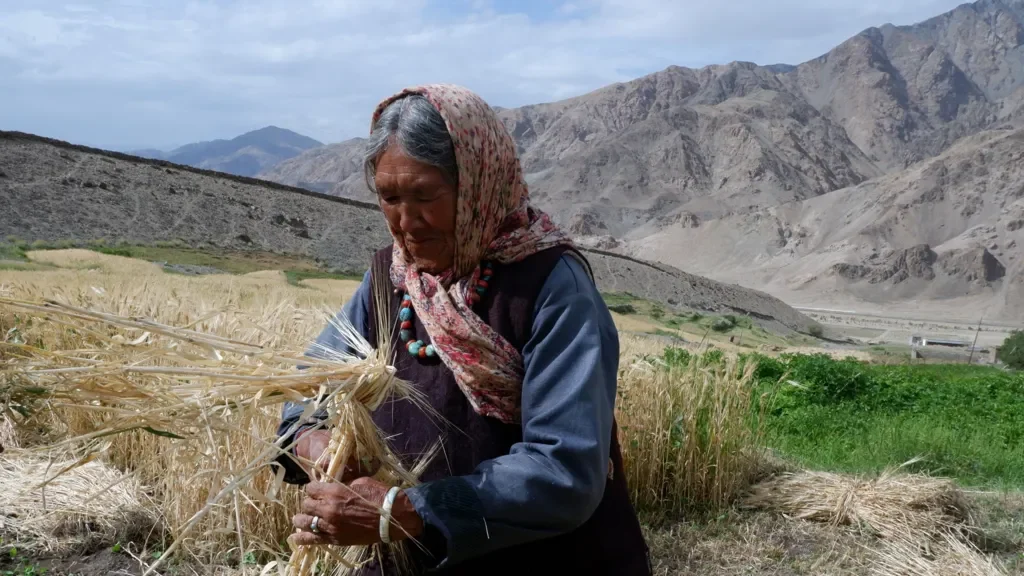
At an altitude of almost 4,000m (13,000ft) and with barely any rainfall, the Himalayan village of Sakti is a hostile place to farm, but artificial ice pyramids are helping residents hold on to their land.
The structures, sometimes known as ice stupas, are built in winter by piping water from mountain streams and spraying it into the freezing air, where it gradually forms tall cones of ice.
Because of their shape, the cones expose relatively little surface to the sun and melt slowly, releasing water during the critical spring planting season when natural streams often run low.
“We are not stopping the glaciers from shrinking, but we are buying our fields some time each spring.”
Farmers in the region have traditionally relied on glacial meltwater, but many say the timing and volume of that supply has become less predictable as temperatures rise.
Local volunteers and community groups oversee construction, with families sharing the labour of laying pipes and monitoring the flow of water during the coldest weeks of the year.
Supporters say the projects have allowed some households to expand the crops they grow, including barley and vegetables, as well as saplings planted for shade and fodder.
The idea has attracted interest from other mountain communities facing similar shortages, and versions of the technique have been trialled in several countries.
Researchers caution that ice pyramids are no substitute for wider action on climate change, but describe them as a practical, low-cost way of storing water where it is needed most.
Organisers hope to build more structures around Sakti this winter, provided temperatures fall low enough for the ice to form.